
How Slot Volatility Really Works (And Why It Matters More Than RTP)
Most players learn about RTP early, but many overlook another statistic that can have an even greater impact on their experience:slot volatility.
Two slot games can have the exact same RTP of 96%, yet one may deliver frequent small wins while the other can go hundreds of spins without a meaningful payout before hitting a large prize. Understanding volatility helps explain why this happens.
If you're choosing a slot based only on RTP, you're missing one of the most important pieces of information.
RTP vs Volatility: What's the Difference?
Many beginners confuse these two concepts, but they measure completely different things.
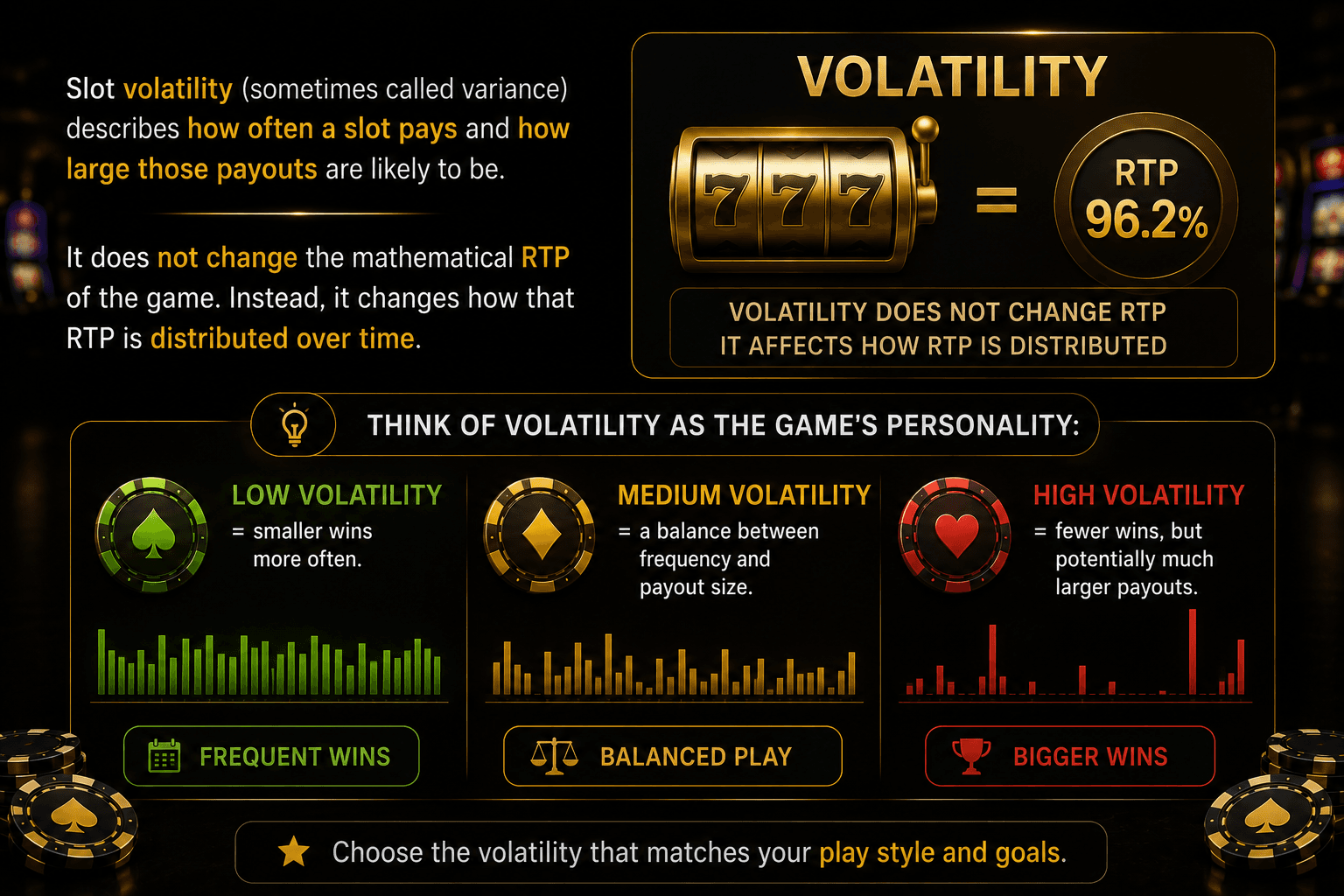
RTP (Return to Player)estimates how much money a slot is expected to return to players over millions of spins.
Volatilitydescribes how that money is paid back.
For example, two games can both have an RTP of 96%.
One may pay €5 every few spins.
The other may pay nothing for a long period before awarding a €500 win.
The long-term RTP is identical, but the player experience is completely different.
Low Volatility Slots
Low volatility slots produce smaller wins more frequently.
They're often recommended for players who:
- have a limited bankroll;
- enjoy longer playing sessions;
- prefer consistent payouts over chasing huge jackpots.
These games rarely produce life-changing wins, but they can keep your balance alive much longer.
Medium Volatility Slots
Medium volatility games aim to balance risk and reward.
They usually offer:
- regular payouts;
- occasional larger wins;
- moderate bankroll swings.
For many casual players, medium volatility provides the most balanced experience.
High Volatility Slots
High volatility slots are designed around larger potential rewards.
They typically feature:
- long losing streaks;
- fewer winning spins;
- higher maximum win potential;
- bonus rounds that can significantly increase payouts.
These games require patience and a larger bankroll because long dry spells are completely normal.
High volatility doesnotmean a slot is "better." It simply means the game's payouts are less frequent but potentially much larger.
Which Volatility Is Best for Beginners?
If you're new to online slots,low or medium volatilityis usually the safest place to start.
These games make it easier to understand bonus features, bankroll management, and overall game mechanics without experiencing the extreme swings common in high volatility titles.
Once you're comfortable with how slots work, you can gradually explore higher-risk games.
Does Higher Volatility Mean Better Odds?
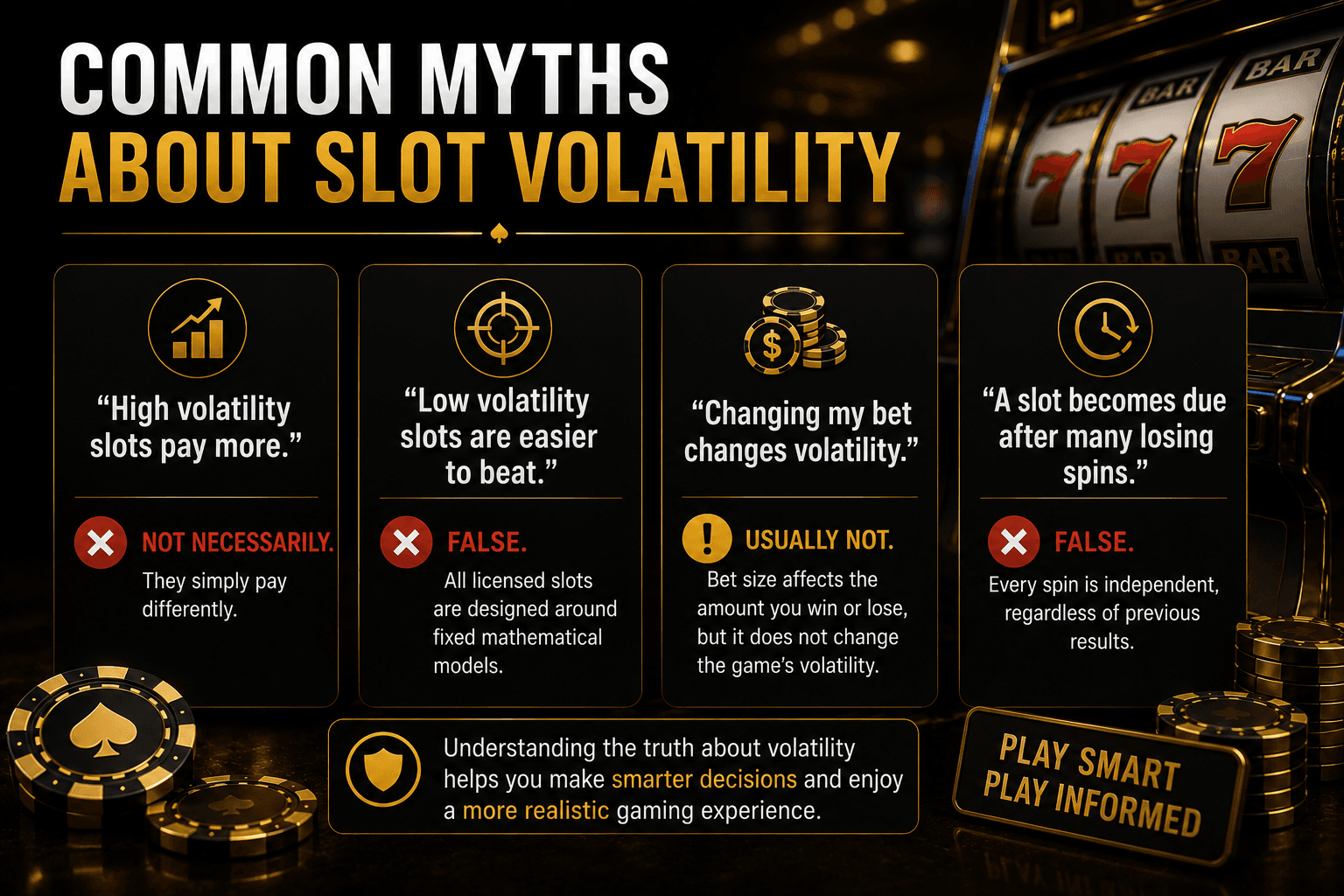
No.
This is one of the biggest misconceptions among slot players.
Higher volatility doesnotincrease your chances of winning.
It only changeshow wins are distributed.
A high volatility slot is just as random as a low volatility one.
Every spin remains independent and is determined by the game's Random Number Generator (RNG).

How Volatility Affects Your Bankroll
Your bankroll should influence the type of slot you choose.
If you have a smaller budget, low or medium volatility generally allows your money to last longer.
High volatility slots often require enough funds to survive long losing streaks before a bonus feature or larger win appears.
Choosing the right volatility won't change your odds, but it can dramatically change how enjoyable your session feels.
Final Thoughts
Volatility is one of the most useful statistics for choosing an online slot, yet many players ignore it.
RTP tells you what a game is expected to return over the long run. Volatility tells you what your journey is likely to feel like.
Understanding both helps you choose games that match your bankroll, playing style, and expectations instead of relying on luck or marketing claims.
If you're still deciding where to play, check out ourBest Online Casinos in Germanyguide for licensed casinos offering a wide selection of slot games.