
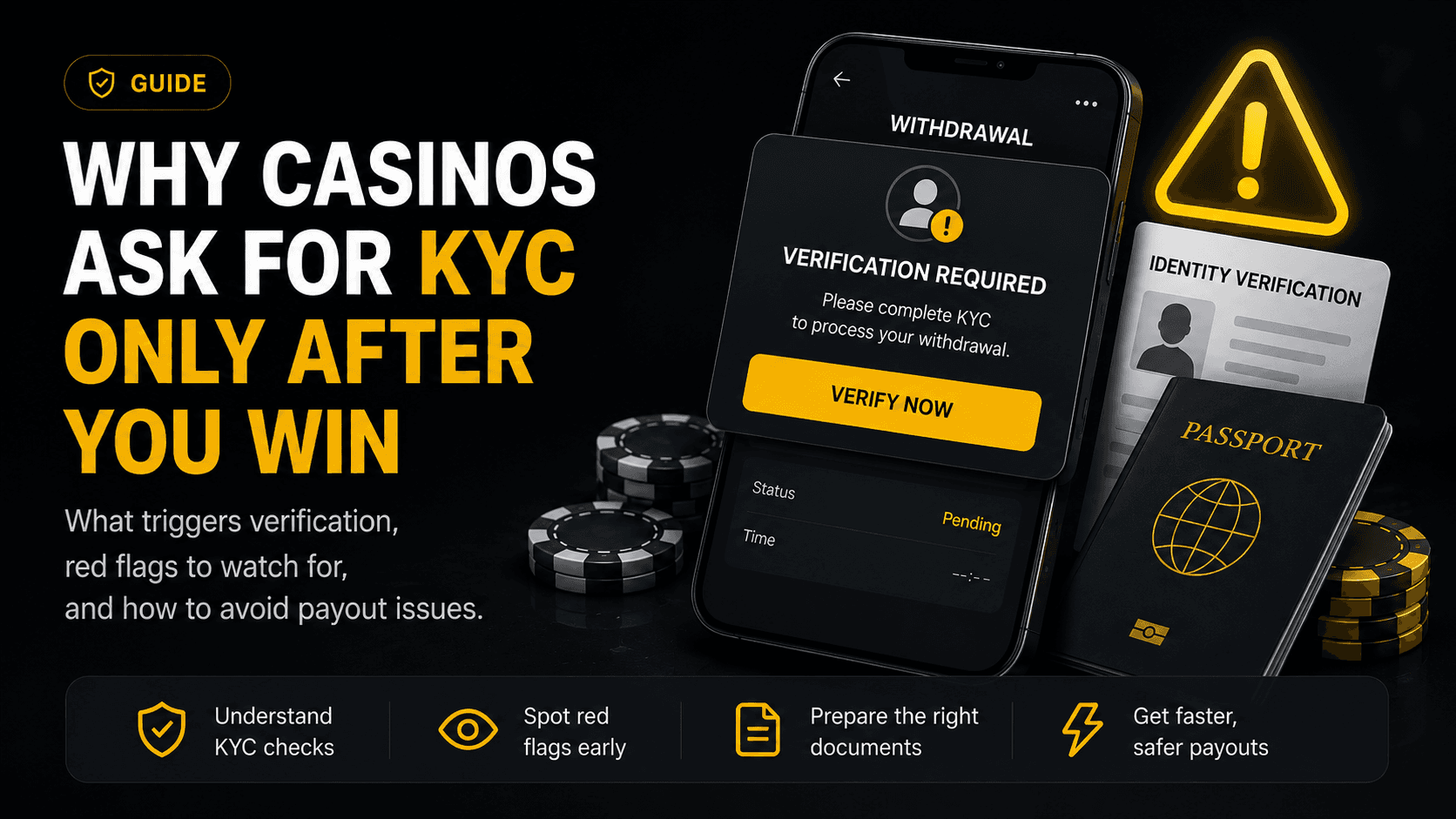
Why Do Casinos Request KYC Only After You Win?
Everything feels smooth at first. Registration takes less than a minute, deposits go through instantly, bonuses activate automatically, and nobody asks questions. But the moment you finally win and try to withdraw your money, the experience suddenly changes. Your withdrawal gets marked as "pending", support sends you a verification request, and the casino suddenly wants documents you were never asked to provide before. For many players, this is the exact moment when panic kicks in.
"If verification was necessary, why didn’t they ask for it before I deposited?"
This is one of the most common complaints in crypto gambling today, especially as more casinos market themselves as "anonymous", "instant", and "no-KYC friendly". The reality, however, is far more complicated than the marketing suggests.
KYC, short for "Know Your Customer", is a verification procedure used to confirm a player’s identity. Most licensed gambling platforms are required to perform some level of verification to comply with anti-money laundering regulations, fraud prevention policies, age verification requirements, and bonus abuse protection. In theory, KYC is a completely normal part of the online gambling ecosystem. In practice, however, many casinos handle the process poorly, and that is where the frustration begins.
The biggest issue is timing. Most players do not actually mind identity verification itself. What frustrates them is being allowed to deposit, gamble, and lose money freely, only to suddenly face restrictions the moment they try to cash out winnings. This creates the impression that verification is being used strategically rather than transparently.
Some casinos genuinely use KYC as part of a legitimate risk management system. Others, unfortunately, use delays, vague policies, and endless reviews to slow down withdrawals and create friction during payouts. That is why understanding how KYC actually works before depositing money is far more important than many players realize.
Why casinos usually verify players during withdrawals
From the casino’s perspective, deposits are low-risk. Money is entering the platform, which means operators have very little incentive to interrupt the process. Withdrawals are completely different. The moment funds leave the casino, risk systems become significantly more aggressive.
Modern gambling platforms automatically analyze:
- withdrawal amounts
- betting patterns
- account history
- device changes
- IP consistency
- VPN usage
- crypto wallet behavior
- bonus activity
- multi-account detection
This means a player can spend days or even weeks gambling normally without any verification request, but the second a large withdrawal is initiated, the account may suddenly get flagged for review.
Common triggers include:
- unusually large wins
- rapid bankroll growth
- first-time withdrawals
- aggressive bonus usage
- suspicious login behavior
- high-risk wallet activity
- multiple linked accounts
In many cases, this is a legitimate fraud prevention mechanism. Crypto gambling carries significantly higher abuse risks compared to traditional online casinos, which is why many platforms now verify users more aggressively than they did a few years ago.
However, not every verification request is handled fairly or professionally.
The problem with "No KYC" casino marketing
One of the biggest misconceptions in crypto gambling is the phrase:
"No KYC casino."
Most players interpret this as:
"This casino will never ask me for documents."
But that is rarely what the term actually means.
In reality, many platforms simply delay verification until:
- larger withdrawals
- suspicious activity
- manual reviews
- bonus-related investigations
- higher betting limits
Some casinos intentionally keep their verification policy vague because frictionless onboarding converts better. Players are far more likely to register and deposit when the process feels instant and anonymous.
This creates a dangerous mismatch between expectation and reality.
A platform may advertise:
- instant registration
- anonymous gambling
- no ID checks
- fast crypto withdrawals
while quietly including a clause deep inside the terms stating that identity verification may be requested at any time.
Technically, the casino disclosed it. Practically, most users never notice the condition until there is significant money involved.
Why some casinos intentionally delay verification
This is where the industry becomes controversial.
Not every delayed verification means a casino is trying to scam players. Sometimes support teams are genuinely overloaded, especially during high traffic periods or large promotional campaigns. However, there are also platforms that clearly benefit from making withdrawals more difficult than deposits.
The longer funds remain inside the casino ecosystem:
- the higher the chance a player keeps gambling
- the more emotional pressure builds
- the more likely withdrawals get canceled
- the higher the probability winnings return to the house
This is why certain casinos develop reputations for:
- endless "pending" statuses
- repeated document requests
- slow support responses
- constant manual reviews
- unclear payout timelines
For players, this creates an immediate trust issue, especially when the same casino originally promoted itself as "instant", "anonymous", or "frictionless".
"A fast deposit means nothing if the payout process turns into a week-long investigation."
This is also why experienced gamblers often value withdrawal reputation far more than bonuses.
Why crypto casinos are stricter than many players expect
Crypto gambling attracts players because of:
- faster transactions
- lower banking friction
- privacy
- accessibility
- international payments
But cryptocurrency also creates additional operational risks for casino operators.
Unlike traditional payment systems, blockchain transactions are irreversible and can be significantly harder to investigate in suspicious cases. As a result, many casinos actively monitor:
- wallet behavior
- transaction patterns
- mixing service exposure
- multi-wallet usage
- suspicious blockchain activity
Some operators even rely on third-party blockchain analytics tools to assign risk scores to wallets and transactions.
This means players can occasionally trigger verification simply because:
- deposits originated from multiple wallets
- VPN locations changed too frequently
- wallet history looked suspicious
- device fingerprints became inconsistent
- betting behavior triggered automated reviews
Even legitimate users sometimes get caught inside aggressive security systems.
Common red flags players should watch for
Not all casinos handle KYC equally. Some platforms are transparent and professional from the beginning. Others create unnecessary friction before problems even start.
Here are several warning signs experienced players usually look for before depositing money.
1. No clear withdrawal policy
If a casino aggressively promotes "instant payouts" but provides almost no information regarding:
- verification requirements
- withdrawal limits
- review procedures
- processing times
that is already a bad sign.
Reliable platforms explain these systems openly instead of hiding them inside vague terms and conditions.
2. Unrealistic bonuses
Extremely large bonuses often come with:
- aggressive wagering requirements
- hidden payout conditions
- strict verification reviews
- manual withdrawal approvals
The more exaggerated the promotion looks, the more carefully the terms should be reviewed.
3. Weak customer support
A professional support team should be able to clearly explain:
- when KYC may happen
- what documents are required
- how long reviews usually take
- why withdrawals are delayed
If support constantly avoids specifics or relies entirely on template responses, payout problems become much more likely.
4. Endless "under review" statuses
A short review period is completely normal. However, if withdrawals remain frozen for days without updates, players should start paying closer attention.
Especially if:
- new documents keep getting requested
- timelines constantly change
- support becomes difficult to reach
- explanations remain vague
How players can reduce the risk of KYC problems
Completely avoiding verification is becoming increasingly difficult in modern crypto gambling. However, players can still significantly reduce the chances of serious payout issues.
The first step is reviewing withdrawal policies before making a deposit. Most users only read terms after something goes wrong, but by then the situation is already much harder to manage.
Experienced players also typically:
- use accurate personal information
- avoid multiple accounts
- avoid suspicious VPN switching
- keep wallet activity consistent
- understand bonus terms before claiming offers
Another important rule is avoiding large balances on unknown platforms. Even when a casino appears trustworthy initially, smaller test withdrawals are always safer before committing significant amounts of money.
What to do if your withdrawal gets stuck on verification
The most important thing is not to panic immediately.
A legitimate verification process can realistically take:
- several hours
- one or two business days
- longer during high traffic periods
However, there is a major difference between a standard review and a platform deliberately stalling payouts.
If:
- support stops responding
- timelines constantly change
- documents keep getting rejected without explanation
- withdrawals remain frozen indefinitely
then it becomes important to document everything carefully.
Players should:
- save screenshots
- keep support transcripts
- record timestamps
- avoid canceling withdrawals emotionally
- check external player feedback
One of the worst mistakes during a pending withdrawal is continuing to gamble emotionally while waiting for support updates.
Final thoughts
KYC itself is not the enemy. Verification has become a standard part of online gambling, especially in crypto casinos dealing with fraud prevention, compliance pressure, and financial risk management. The real issue is transparency.
Most players are perfectly willing to verify their identity if the process is explained clearly from the beginning. Problems begin when casinos market themselves as completely anonymous, only to suddenly introduce strict reviews after a significant win.
This is why experienced gamblers often judge casinos based on:
- withdrawal reputation
- support quality
- verification transparency
- payout consistency
- operational trustworthiness
rather than simply focusing on bonuses or aggressive promotions.
Because in the end, the most important part of gambling is not depositing money.
It is being able to withdraw it.