
What Makes a Casino Game Feel “Lucky”? The Psychology Behind Casino Design
Some casino games immediately grab your attention.
The colours are brighter. The animations feel more exciting. Every win comes with a sound flashing symbols or a short celebration. Even a small payout can feel like something important just happened.
But what actually creates that feeling?
Casino game design is built around more than simply showing the result of a spin.Visual effects, sounds, reward animations and game mechanics can all influence how players perceive the experience.
Importantly, these features don't make a game mathematically luckier. The underlying RNG, RTP and game rules determine the actual probabilities.
So why can two games with similar mathematical characteristics feel completely different?
1. Your Brain Notices Wins More Than Numbers
Imagine two games.
One shows:
WIN — €2.00
The other fills the screen with animations, music and a bigWINmessage after the same €2.00 result.
The financial outcome is identical, but the second experience feels much more significant.
This is one of the basic ideas behind modern casino design:the presentation of a result can affect how strongly you experience it.
Games therefore use visual and audio feedback to make outcomes more noticeable and memorable.
2. Sound Turns a Result Into an Event
Sound is one of the easiest ways to change the atmosphere of a game.
A winning combination might trigger:
- coins or cash sounds;
- rising musical effects;
- celebratory jingles;
- increasingly intense sounds for larger wins;
- special audio during bonus rounds.
Even before you look at the balance, your brain receives a signal that something positive has happened.
That's why playing the same game with the sound muted can feel surprisingly different.
3. Near-Misses Can Feel Like Almost-Wins
Three matching symbols would normally produce a win.
Two matching symbols plus a third symbol appearing just one position away can create a very different psychological reaction.
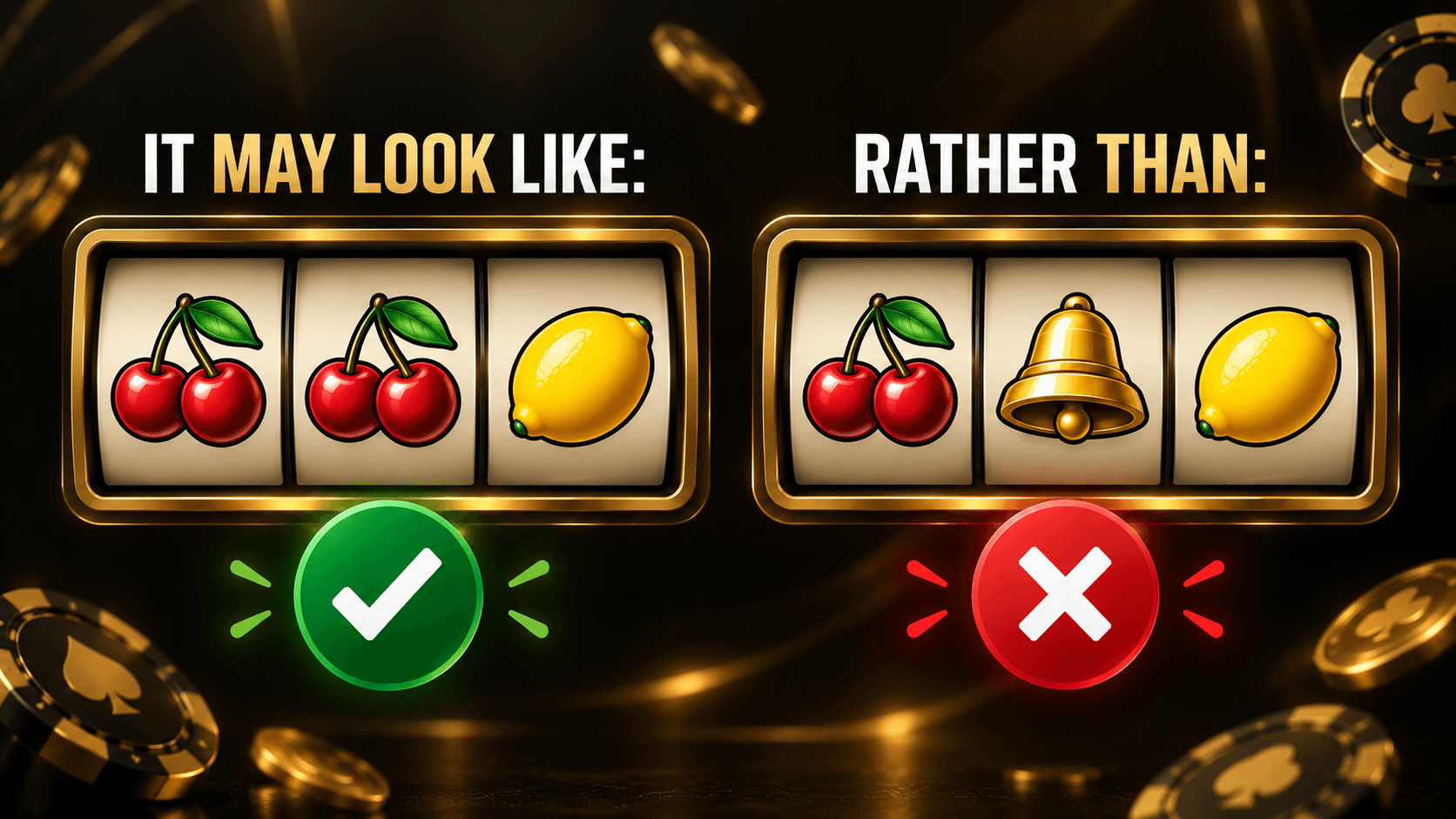
Mathematically, both are losing outcomes.
But the first canfeelcloser to success.
This is known as anear-miss: the outcome doesn't produce a win, but its presentation resembles one.
That feeling should not be confused with being genuinely close to a future win. A previous near-miss does not make the next spin more likely to succeed.
4. Bonus Rounds Change the Experience
Modern slots rarely rely on spinning reels alone.
Free spins, multipliers, expanding symbols, pick-and-win features and other bonus mechanics create moments where the player feels more involved.
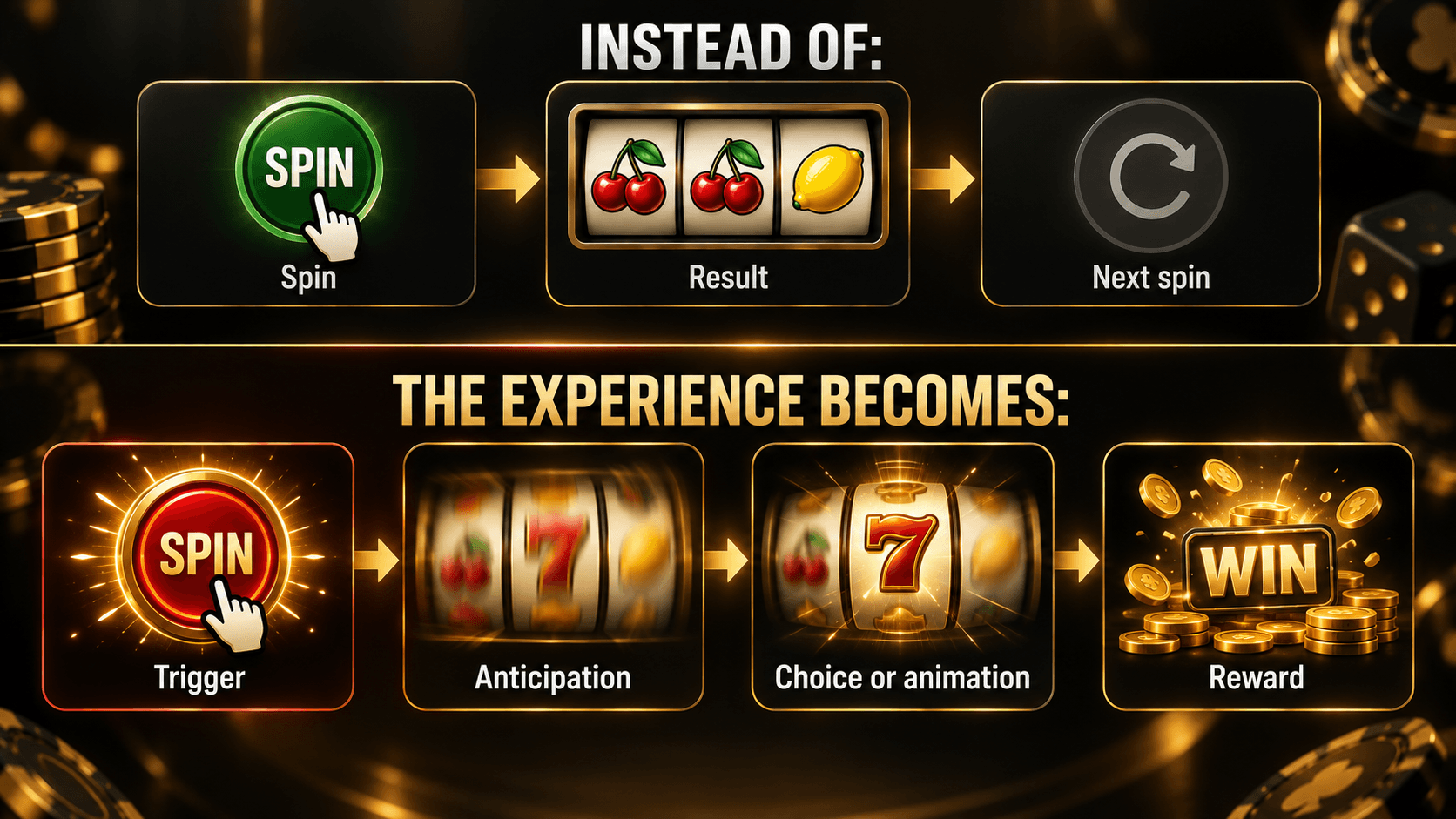
That extra interaction can make a game feel more exciting, even when the underlying probabilities remain unchanged.
5. Bigger Celebrations Don't Always Mean Bigger Wins
One of the easiest things to overlook is the relationship betweenthe size of a win and the way it's presented.
A game might celebrate a small win with flashing lights and several seconds of animation.
This creates a psychological distinction between:
How much you won
and
How exciting the game made the win feel.
That's why it's useful to look at the actual payout rather than judging a game's performance by its animations.
6. Colours and Themes Create Expectations
Game themes can also influence perception.
A bright treasure-themed slot might communicate adventure and discovery.
A luxury-themed game might use gold, diamonds and premium imagery to create a feeling of high value.
A dark fantasy game can create a completely different atmosphere.
None of these themes changes the game's RTP or RNG.
But they can influencehow players interpret the experience.
This is particularly noticeable when comparing modern video slots, where visual design has become a major part of the product.
7. Why Some Games Feel More “Active”
Not every slot is designed to feel equally intense.
Some games have:
- frequent small wins;
- constant animations;
- multiple bonus mechanics;
- cascading symbols;
- rapid visual feedback.
Others are much simpler and quieter.
This can affect how frequently playersfeelthat something is happening.
That's wherevolatilitybecomes important.
A high-volatility game may have longer periods without meaningful wins but potentially larger payouts. A lower-volatility game may produce smaller wins more frequently.
The design can amplify these differences, but it doesn't replace the underlying mathematics.
What Actually Determines Your Chances?
This is the important part.
A game canlooklucky without actually having better odds.
When comparing casino games, pay attention to:
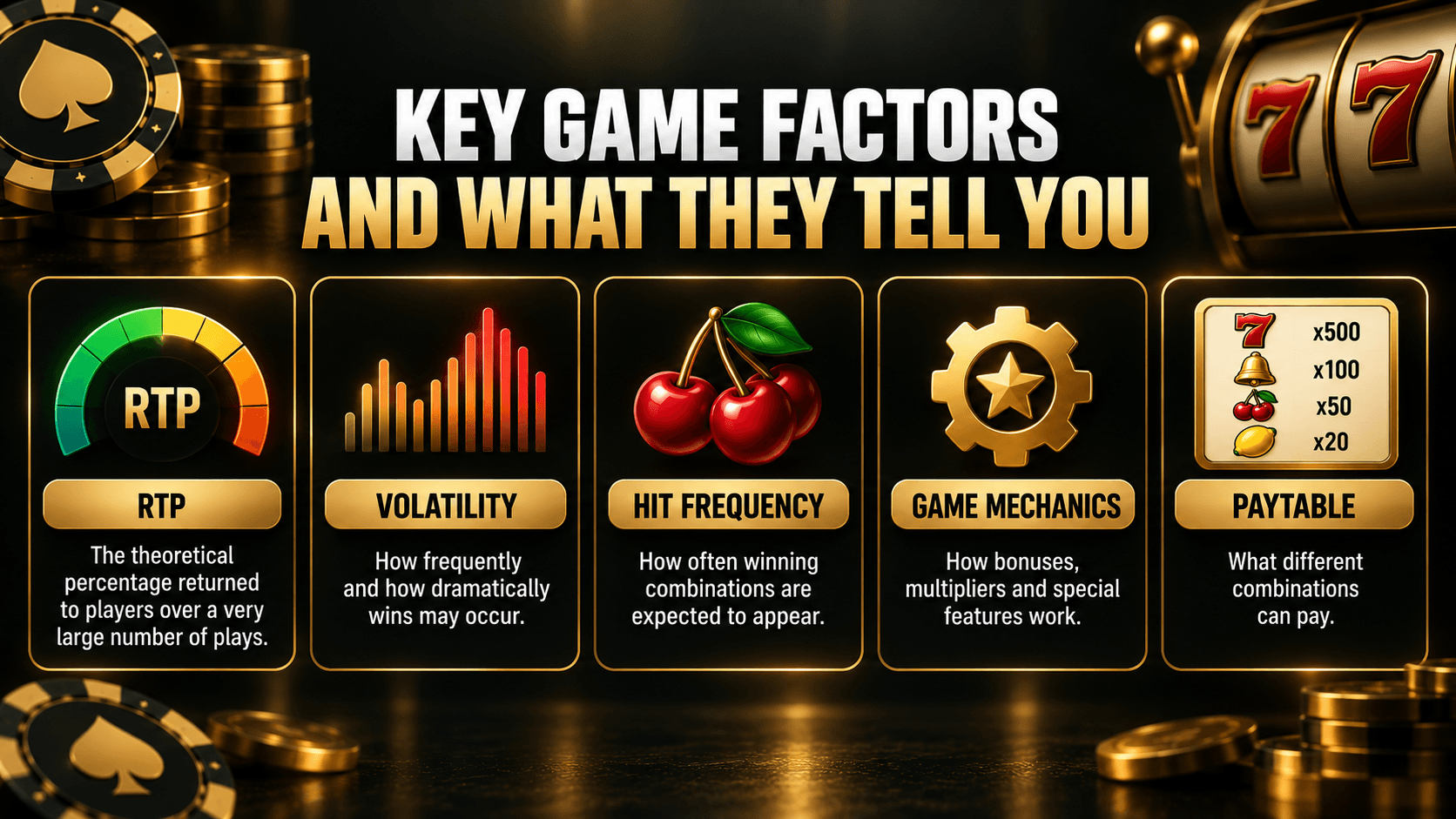
These factors are much more useful than flashy animations or the feeling that a particular slot is “hot”.
The Psychology Behind the Experience
Casino developers have a simple challenge:
A game needs to communicate its results in a way that keeps the experience engaging.
That's why modern games combine mathematics with:
- sound design;
- animation;
- colour;
- anticipation;
- reward feedback;
- bonus features;
- themed storytelling.
The result can make a game feel exciting, rewarding or even lucky —without changing the probability of the underlying outcomes.
Final takeaway
The next time a casino game feels unusually lucky, look beyond the reels.
Ask yourself:
Is the game actually performing differently — or is its design making every result feel more exciting?
RTP, volatility and the game's rules tell you much more about what you're playing than flashing lights, winning sounds or a particularly satisfying bonus animation ever could.